
Board Certified Allergist & Immunologist
Blog
Vaccine Injury
Vaccine Injury
Everything You Need to Know About Long COVID
Discover what is long COVID: symptoms, causes, risks & management. Expert guide to prevalence, prevention & recovery strategies.

April 7, 2026
8 Minutes

What Is Long COVID? (And Why It Affects Millions)

What is long COVID is one of the most searched health questions since the pandemic — and for good reason.
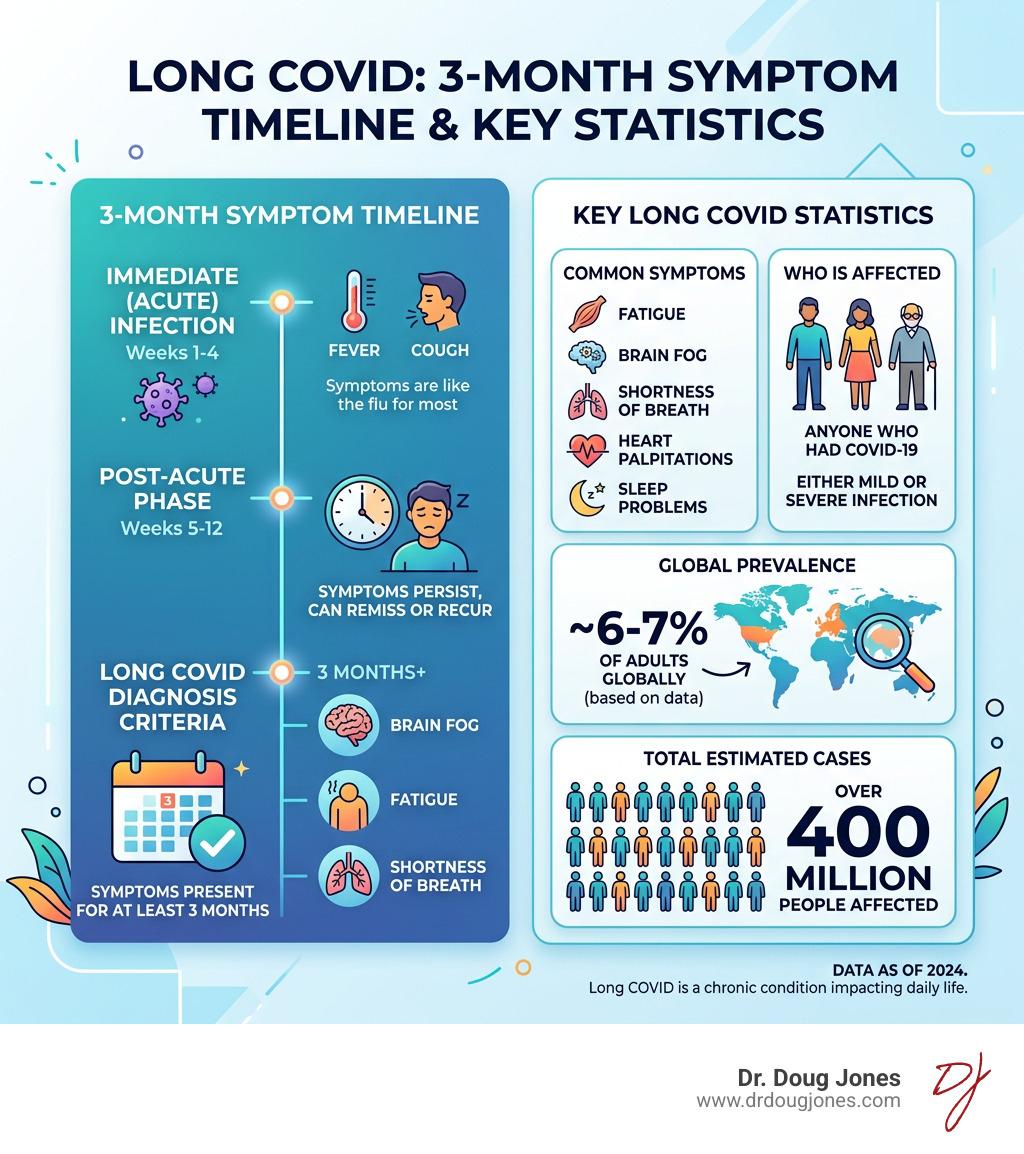
Long COVID is a chronic condition that develops after a SARS-CoV-2 (COVID-19) infection. Symptoms last for at least 3 months and can persist for years. They may improve, worsen, or come and go over time.
Here is a quick summary:
| Feature | Details |
|---|---|
| Also known as | Long-haul COVID, post-COVID conditions, PASC |
| Duration | 3+ months after initial infection |
| Symptoms | 200+ identified, including fatigue, brain fog, and shortness of breath |
| Who gets it | Anyone who has had COVID-19, even mild cases |
| Prevalence | ~6-7% of adults globally as of 2024 |
| Global cases | Over 400 million people affected |
Long COVID is not rare, and it is not "just in your head." It is a real, recognized medical condition that can disrupt work, daily activities, and quality of life.
I'm Dr. Doug Jones, a board-certified immunologist who regularly treats patients dealing with long COVID and complex immune challenges — so I understand how confusing and exhausting the search for answers around what is long COVID can be. In this guide, I'll break down everything clearly so you can move forward with confidence.
Understanding What is Long COVID
To understand what is long COVID, we have to look past the initial "flu-like" phase of a standard infection. While most people bounce back from a COVID-19 infection within two to four weeks, a significant number of individuals find that the finish line keeps moving.

When we talk about this condition, we are describing a multisystemic disease. This means it doesn't just stay in the lungs; it can affect the heart, the brain, the gut, and the immune system. Scientists and medical organizations have worked hard to create a standardized definition of Long COVID to ensure patients get the recognition and disability support they deserve.
Defining What is Long COVID and Its Alternative Names
If you’ve been browsing medical forums or talking to doctors, you might have heard a few different terms. In our clinic, we use these names interchangeably, but they all point to the same struggle:
- PASC: This stands for Post-Acute Sequelae of SARS-CoV-2. It’s the "science-y" name used by researchers at the NIH.
- Long-haul COVID: A term coined by patients early in the pandemic to describe the "long haul" of recovery.
- Post-COVID Conditions (PCC): The umbrella term often used by the CDC.
- Chronic COVID: A term used to highlight the long-term, persistent nature of the symptoms.
The core requirement for a diagnosis is duration. Symptoms must be present for at least 3 months after the initial infection. One of the most frustrating aspects we see is the relapsing-remitting nature of the illness. You might feel great on Tuesday, overdo it slightly on Wednesday, and find yourself back in bed by Thursday. This "rollercoaster" effect is a hallmark of the condition.
Common Symptoms: Identifying What is Long COVID in Daily Life
Research has identified more than 200 different symptoms associated with this condition. Because it can affect almost any organ, no two patients look exactly the same. However, a few "heavy hitters" show up in almost every case we treat:
- Fatigue: This isn't just being "tired." It is a bone-deep exhaustion that sleep doesn't fix.
- Brain Fog: Many patients describe this as a feeling of being "spaced out," having trouble finding words, or struggling to focus on simple tasks.
- Post-Exertional Malaise (PEM): This is a critical one to watch for. It’s a "crash" that happens after physical or mental effort, often appearing 12 to 48 hours after the activity.
- Respiratory and Heart Issues: Shortness of breath, a lingering cough, or heart palpitations (feeling like your heart is racing) are very common.
- Neurological Changes: This includes headaches, sleep disturbances, and changes in taste or smell.
If you are struggling with these, long covid symptoms are real, and you are certainly not alone.
Prevalence, Risk Factors, and Causes
How common is this, really? Estimates vary, but data suggests that between 10% and 35% of people who contract COVID-19 will deal with some form of long-term symptoms. Globally, this adds up to over 400 million people.
To put the numbers in perspective, look at how prevalence changes based on the severity of the initial illness:
| Population Group | Estimated Prevalence |
|---|---|
| Hospitalized COVID-19 Patients | 50% – 85% |
| Non-Hospitalized (Mild) Cases | 10% – 35% |
| Vaccinated (Breakthrough) Cases | 8% – 12% |
What is Happening Inside the Body?
As an immunologist, I find the "why" behind what is long COVID fascinating, though we are still learning every day. There are four leading theories:
- Viral Persistence: The virus (or fragments of it) may hide in "reservoirs" like the gut or nervous system, keeping the immune system on high alert.
- Autoimmunity: The infection may trick the body into attacking itself. Research on autoimmune responses shows that some patients develop autoantibodies that target their own tissues.
- Systemic Inflammation: The "cytokine storm" from the initial infection may never fully settle down, leading to chronic, low-grade inflammation.
- Microvascular Damage: Tiny blood clots or damage to the smallest blood vessels may prevent oxygen from reaching tissues effectively.
High-Risk Populations
While anyone can become a covid long hauler, certain factors increase the likelihood:
- Severity of Illness: Those who were hospitalized or required intensive care have the highest risk.
- Vaccination Status: Unvaccinated individuals are significantly more likely to develop long-term complications.
- Biological Sex: Studies consistently show that women are diagnosed with long COVID more frequently than men.
- Underlying Conditions: Pre-existing asthma, diabetes, or cardiovascular disease can complicate recovery.
- Health Inequities: Due to systemic factors, Hispanic and Latino populations have shown higher rates of the condition in several U.S. surveys.
Complications and Management Strategies
Long COVID doesn't just exist in a vacuum; it often invites other conditions to the party. We frequently see an overlap with Myalgic Encephalomyelitis/Chronic Fatigue Syndrome (ME/CFS). Both conditions share symptoms like PEM and extreme exhaustion, and many researchers believe they may share similar biological roots.
Other complications include:
- POTS (Postural Orthostatic Tachycardia Syndrome): Feeling dizzy or having a racing heart when you stand up.
- PICS (Post-Intensive Care Syndrome): Problems with thinking, mental health, and physical weakness following a hospital stay.
- Organ Damage: Long-term scarring in the lungs or inflammation of the heart muscle (myocarditis).
- Mental Health: Symptoms of PTSD, anxiety, and depression are common, often as a direct result of the physical toll of the illness.
Because of the significant impact on daily life, the U.S. government has provided guidance on Long COVID as a disability under the ADA. This is a huge step for patients needing workplace accommodations.
Prevention and Research
The absolute best way to prevent long COVID is to avoid getting COVID-19 in the first place. This means practicing good hygiene, ensuring proper ventilation, and—most importantly—staying up to date with vaccinations.
Does vaccination help? Yes! Research suggests that being vaccinated can reduce your risk of long COVID by up to 69% if you have had three doses. Even if you get a breakthrough infection, your chances of the symptoms "sticking around" are much lower than if you were unvaccinated.
The medical community is fighting back with massive research efforts. The latest NIH RECOVER research is a multi-billion dollar initiative designed to find answers. They are currently running clinical trials (like RECOVER-VITAL and RECOVER-NEURO) to test everything from antivirals to "brain-training" exercises for cognitive fog.
Frequently Asked Questions about Long COVID
Is there a specific test for Long COVID?
Currently, there is no single laboratory test or "blood check" that can confirm if you have long COVID. Diagnosis is based on your medical history, a confirmed or suspected past COVID-19 infection, and a physical exam to rule out other causes. This is why it is so important to work with an immunologist or specialist who understands the long covid symptoms profile.
How long do symptoms typically last?
Recovery timelines are different for everyone. Some people see significant improvement after 6 months, while others are still managing symptoms years later. The good news is that many people do improve over time with proper pacing and symptom management.
Does the vaccine prevent Long COVID?
While it isn't a 100% guarantee, the vaccine is the most effective tool we have. It reduces the risk of severe initial illness (the biggest risk factor) and significantly lowers the chance of persistent symptoms in breakthrough cases.
Conclusion: A Path to Lasting Relief
Navigating what is long COVID can feel like wandering through a thick fog. But we want you to know that the fog can lift. At our practice, we focus on the patient's complete clinical picture.
As a board-certified immunologist, I am dedicated to redefining how we handle these complex immune challenges. We believe in a personalized approach that combines the best of clinical science with a comprehensive understanding of immune health. Whether it's managing post-exertional malaise or investigating underlying inflammation, our goal is to empower you with the tools for a real recovery.
If you are ready to find answers and start your recovery, we are here to help you find lasting relief. You can find more info about long covid services on our website, where we continue to share the latest research and strategies for reclaiming your health. We are in this together, and we won't stop until you feel like yourself again.